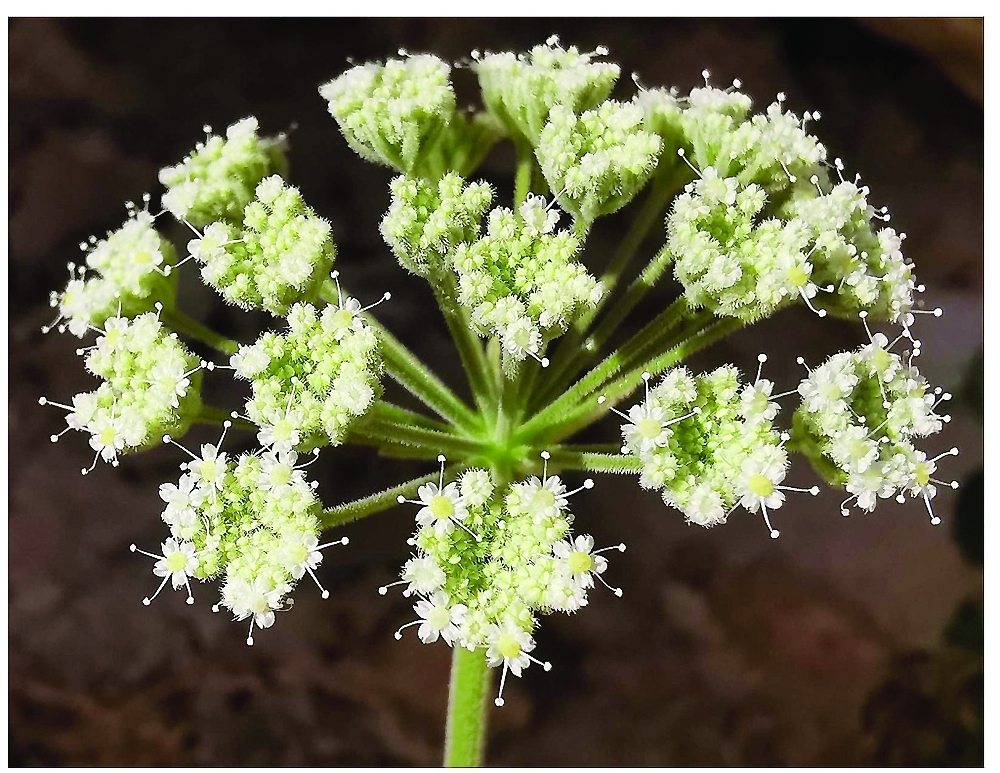





MUSCAT: Sultan Qaboos University (SQU), represented by the Life Sciences Unit at the College of Science, announced a new scientific discovery of the plant (Adenosciadium omanensis), which had not previously been registered in the list of world plants. This species was named after Oman to indicate its location when it was recorded for the first time in the world, as this plant inhabits the limestone plateaus on the coasts, especially the eastern regions of Al Hajar Mountains in the north of the Sultanate of Oman.
Adenosciadium omanensis belongs to the Apiaceae family and is similar in some of its characteristics to the Adenosciadium arabicum plant, which belongs to the same family and is found in the south of the Sultanate of Oman and extends to Yemen. However, this new plant species differs in its apparent characteristics, which developed due to the difference in climate and environmental terrain and is one of the catalysts for evolution and the emergence of species.
The most important specifications of the new type are the leaves with a velvety texture and leaflets with kidney-shaped serrated edges. It is also characterised by a larger number of flowers and differs in the shape and size of seeds from the other type.
This new species was adopted internationally through publication in the Edinburgh Scientific Journal of Botany. This journal is one of the most famous peer-reviewed scientific journals that is linked to one of the most important international herbaria and has experts in plant classification, especially those documented from the Arabian Peninsula. A sample of the plant was preserved in the Sultan Qaboos University Herbarium (SQUH).
No local name has been identified for this species, nor is there any information available about its uses, which requires conducting more research to discover its chemical properties and evaluate its potential medical uses and environmental importance. — ONA
Oman Observer is now on the WhatsApp channel. Click here